
Hardscape & Patios
Concrete, pavers, flagstone, and decomposed granite patios — properly graded, built on a compacted base, and installed by Ryan from start to finish.


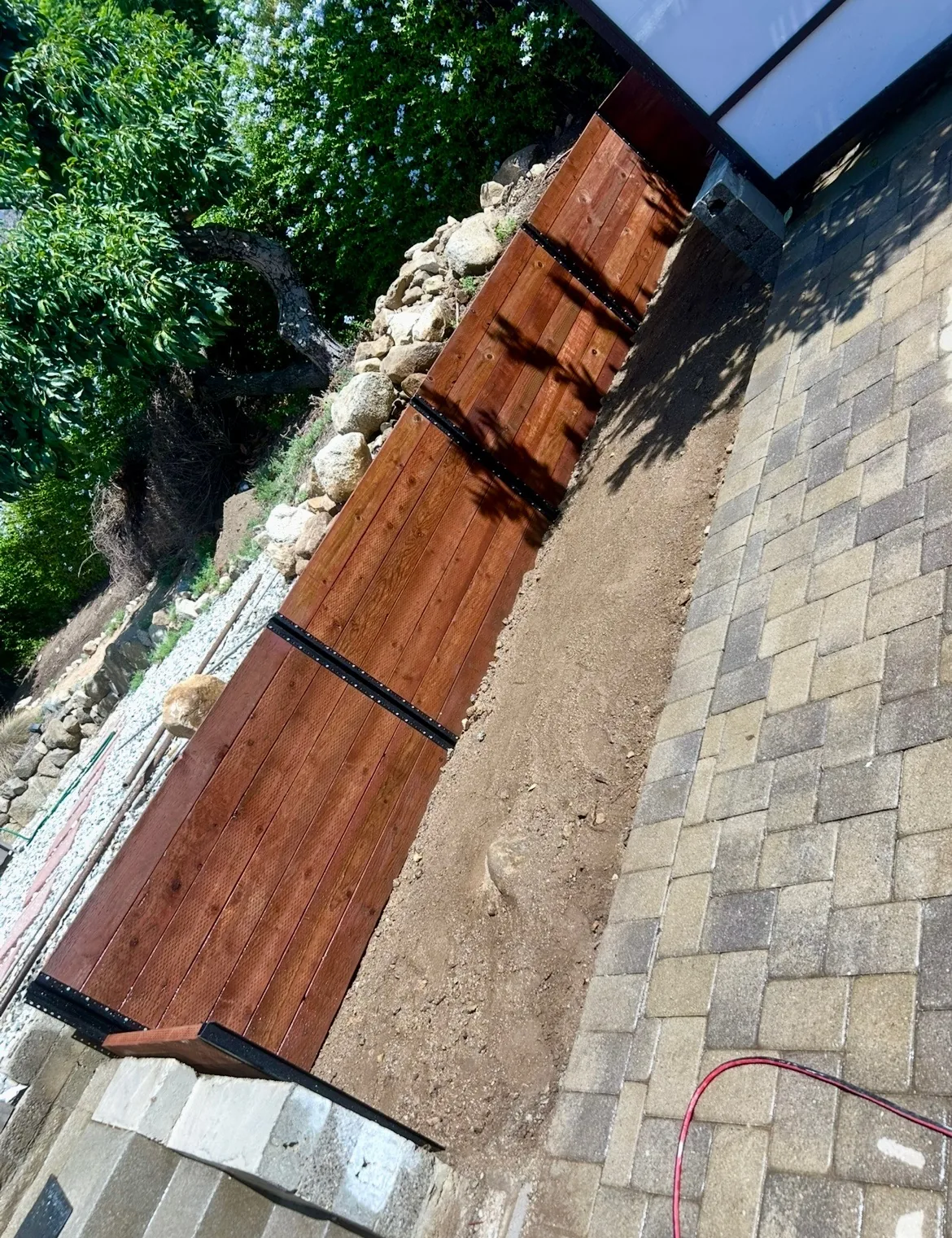
See the transformation
 Before
  After
After The foundation of your outdoor living space
A patio is the most-used feature in any backyard — and only as good as what’s underneath it. The surface is the last step; what makes it last 20 years instead of 5 is the base: proper excavation, compacted gravel, and the correct drainage slope. Ryan builds patios with no shortcuts on the prep you’ll never see.
Patio materials we install
Poured concrete
The most versatile, cost-effective option — broomed, stamped, or smooth, integrally colored or stained. With proper base prep and strategic control joints, it lasts decades.
Interlocking pavers
A modular surface that handles movement better than slab concrete — a settled section lifts and re-levels without tearing out the patio. Herringbone, running bond, and basketweave patterns, edge-restrained against shifting.
Natural flagstone
An organic, high-end look that blends with Altadena’s foothill landscape. Dry-laid on compacted gravel or mortar-set on a slab, in warm tans through blue-grays.
Decomposed granite
Budget-friendly and permeable, installed with stabilizer for a firmer surface — ideal for casual seating areas and garden paths.
What goes under your patio
The part most contractors rush: excavation to the correct depth with a compacted subgrade, 4–6” of crushed gravel compacted in 2” lifts, a minimum 1/4-inch-per-foot slope away from the house (with a channel drain where needed), and staked edge restraint so pavers don’t migrate.
Patio design for Altadena properties
Many Altadena yards slope, so a patio often pairs with a retaining wall — Ryan builds them as one integrated project so drainage and grading work together. He sizes the patio to your actual use (grill, table, afternoon shade), meets the door threshold cleanly, and combines materials — pavers, DG, flagstone — so transitions look cohesive, not bumped together.
Ready to discuss your project?
Free estimates. No pressure. Just honest advice from Ryan.
How it works
Call Ryan to discuss your outdoor living goals
On-site measurement and material discussion
Detailed written estimate with options
Build — Ryan on-site daily from excavation to finish
Pricing guidance
Patio installation in Altadena typically costs $15–$30 per square foot for concrete, $20–$40 for pavers, and $25–$50 for natural flagstone. A standard 300-square-foot patio runs $4,500–$15,000 depending on material and site prep requirements.
Every property is different. Call Ryan to discuss your specific project.
Common questions
How much does a patio cost in Altadena?
What patio material is best for Altadena?
How long does patio installation take?
Do I need a permit for a patio?
Will my patio crack or settle?
You might also need

Complete Backyard Renovations
Build your patio as part of a full backyard transformation.
Learn More

Serving Altadena & the San Gabriel Valley
Ready to talk about your backyard?
Whether it's a fence, a full renovation, or fire damage restoration — it starts with a conversation.